What the numbers mean
A possible deal isn’t revenue.
Count what’s real.
Before putting more money into a partner, ask what it has helped bring in, what might still close, and what the work has cost.
Keep these numbers separate
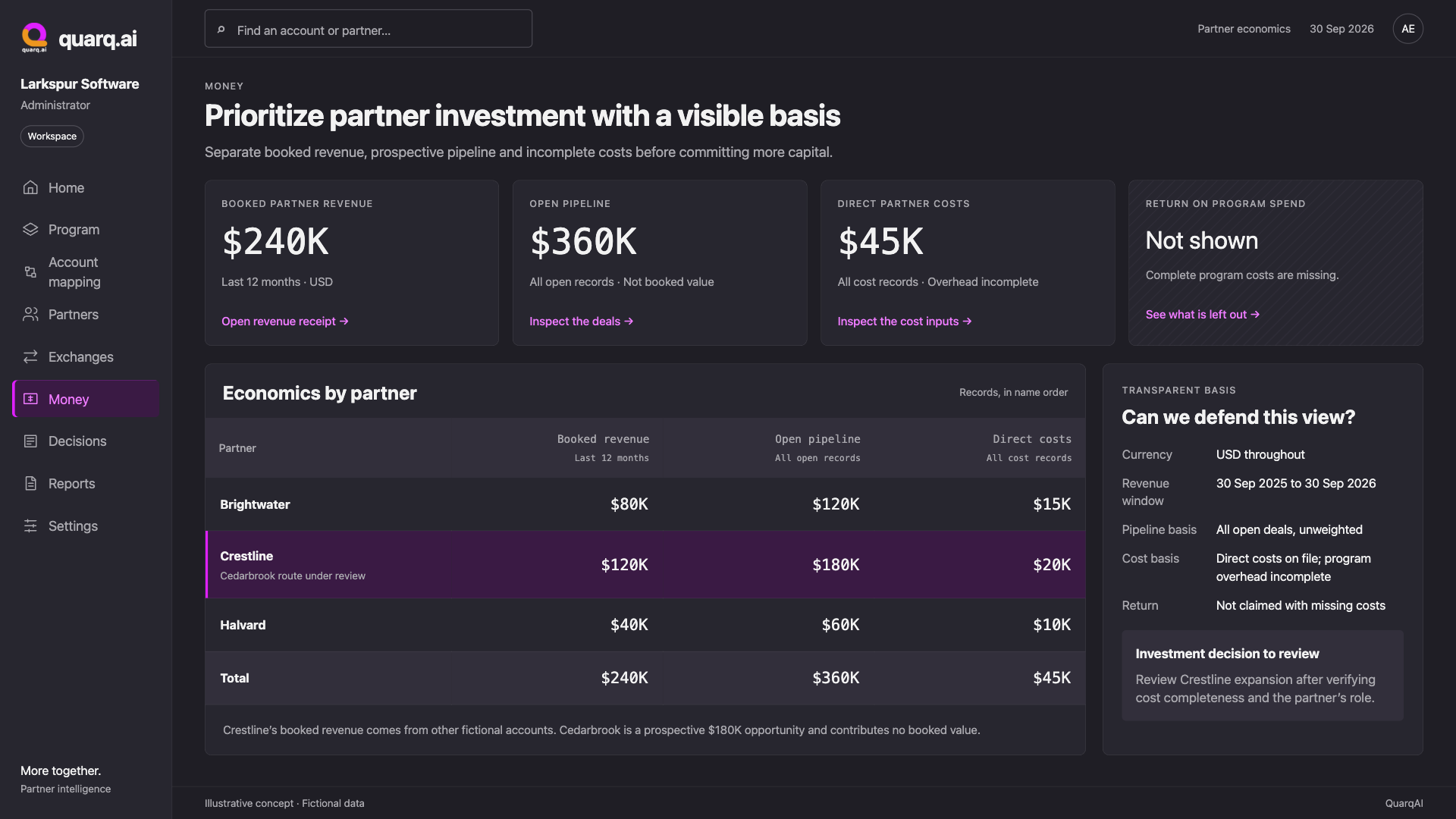
- Revenue booked
- $240KUSD · 30 Sep 2025 to 30 Sep 2026
- Possible sales
- $360KUSD · All open deals · Not revenue
- Direct costs
- $45KUSD · Costs on file · Some overhead missing
Illustrative concept · Fictional data
What’s in this example
- Revenue booked: $240,000 USD across the illustrated partner records, for 30 September 2025 to 30 September 2026.
- Possible sales: $360,000 USD across all open deals. These amounts are not adjusted for the chance of winning and are not counted as revenue. Cedarbrook’s possible $180,000 sale has brought in no revenue.
- Direct costs: $45,000 USD across the costs on file. Some program overhead is missing.
Crestline’s $120,000 of booked revenue comes from other fictional accounts. It tells you nothing about whether Crestline is working with Cedarbrook.
Missing costs mean missing answers
Some costs are missing, so we can’t tell you the return. Adding possible deals to booked revenue would make the number bigger. It wouldn’t make it true.
A score isn’t revenue
Keep any partner score separate from money. Revenue needs a currency, a reporting period and a clear rule for crediting shared deals.
Count each deal once in the portfolio total. Show booked revenue and open opportunities separately so a promising deal can’t inflate the result.